
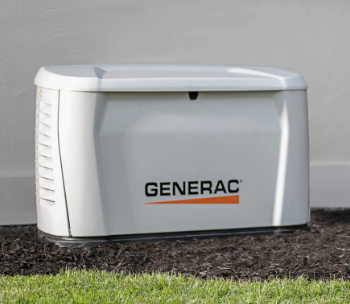
Quick answer: A standby generator is a permanent unit that starts by itself when utility power fails and runs on natural gas or propane. It keeps heating, cooling, refrigeration and medical equipment going through a Kansas outage. With a professional install and a yearly service visit, it stays ready for the next storm.
A July thunderstorm rolls through at dinner. The lights flicker once, then quit. The air conditioner stops. Your phone says the utility expects power back by morning, and the forecast says it will still be ninety degrees at midnight.
That is an illustration, but plenty of Kansas households have lived some version of it. The question is what you would rather be doing when it happens: hunting for a flashlight, or watching the house hum along like nothing had happened. This guide explains what a home standby generator in Kansas actually does, how a Generac system works, what installation involves, and what it takes to keep one healthy.
What is inside
- Kansas weather does not ask before it takes the power
- Hour one to day three: what an outage really costs you
- How a Generac standby generator actually works
- Standby or portable? A side-by-side look
- What installation takes, start to finish
- Keeping it ready: a year of generator care
- Picking a Generac dealer near Great Bend
- Call Hammeke before the next storm
Kansas Weather Does Not Ask Before It Takes the Power
Ice loads up lines in winter. Thunderstorms and straight-line winds snap poles in spring and summer. Tornado season brings its own damage. Then comes the heat, when the grid is already stretched and one fault can leave a whole neighborhood dark.
Repairs take time. Crews have to reach every downed line, and a big storm means a long list. You cannot control any of that. You can control what your house does while it waits.
Hour One to Day Three: What an Outage Really Costs You
The first few hours
Lights go out and phones start draining. The fridge holds its cold for a while if you keep the door shut. Most people shrug at this stage. It feels like an inconvenience.
Overnight
Here is a detail that surprises people. A gas furnace still needs electricity to run its blower and controls, so it will not heat the house without power. A sump pump stops pumping. A well pump on a rural property stops too, which means no running water.
Medical equipment
Oxygen concentrators, CPAP machines and refrigerated medication do not wait politely. If anyone in your home depends on powered equipment, an outage is a safety problem, not a comfort problem.
Day two and beyond
Food spoils. Pipes can freeze in a cold snap. A summer outage turns a closed-up house into an oven. The longer an outage lasts, the more you pay in spoiled groceries, hotel rooms and repairs.
How a Generac Standby Generator Actually Works
A unit that lives outside and runs on gas
A standby generator sits on a pad beside the house, much like a central air unit. It runs on natural gas from your utility line or on propane from a tank. There is no fuel to haul and no cord to drag across the lawn.
The transfer switch does the thinking
Wired next to your main electrical panel, the automatic transfer switch watches the incoming power. When the utility drops, it signals the generator to start, then moves your home onto generator power within seconds. When the grid returns, it switches back and shuts the engine down. You do not have to touch anything.
Whole house or key circuits
Whole-house coverage
A larger unit can carry everything, including central air, an electric range and a water heater.
Essential circuits only
A smaller unit can power the things you cannot do without: furnace, refrigerator, sump pump, lights, internet.
A note on big loads
Air conditioners and well pumps draw a surge when they start. Load management devices can stagger them so a mid-sized unit does not struggle. This is part of why sizing is done on paper before anyone orders equipment.
Standby or Portable? A Side-by-Side Look
Portable generators have a place. They are cheaper up front and handy for a campsite. For whole-home protection, the differences are hard to ignore.
| Feature | Portable generator | Standby generator |
| Starts on its own | No, someone has to set it up and start it | Yes, within seconds of an outage |
| Fuel | Gasoline you store and refill | Natural gas or propane from a line or tank |
| Runs while you are away | No | Yes |
| Connects to the house | Extension cords or a manual hookup | Your electrical panel, through a transfer switch |
| Setup every outage | Every time | None |
| Where it lives | Dragged out and kept outdoors, away from windows | Permanent outdoor pad with required clearances |
What Installation Takes, Start to Finish
Generator installation in Kansas is part electrical job, part gas job and part site planning. Skipping any of the three is how a generator ends up undersized or noncompliant.
A site visit and a load calculation
We start by adding up what you want to run. That number sets the unit size. Guessing here is the most common way people end up disappointed.
Fuel supply
Natural gas needs a line with enough capacity for the engine. Propane needs a tank sized for your expected run time. Either one may need new piping.
Placement and clearances
The pad has to sit a safe distance from windows, doors and the house wall, and it has to meet local rules. Think about where noise will land, too.
Wiring, transfer switch and sign-off
The transfer switch and panel work should be done by a licensed electrician. Permit and inspection rules vary by city and county, so ask up front who handles them.
Keeping It Ready: A Year of Generator Care
A generator that sits idle for months needs attention, the same as any engine. Generator maintenance in Kansas also has to account for cold starts and dusty summers.
The weekly self-test
Generac standby units run a short test on a set schedule, usually once a week. That cycle keeps the engine lubricated and flags problems early. If the display shows a warning, do not wait for a storm to find out why.
The yearly service visit
Typical tasks include checking the oil and filters, inspecting spark plugs and testing the battery. Follow the schedule in your owner’s manual. A battery that is weak in October may not start the engine in January.
After a storm
Walk out and look. Clear debris, snow and leaves from around the unit so air can move through. Keep the pad area open all year.
Picking a Generac Dealer Near Great Bend
The dealer you choose matters as much as the machine. A few questions are worth asking before you sign anything:
- Is the dealer certified by the manufacturer?
- Who coordinates the electrical work, the gas connection and the install, so nothing falls between contractors?
- Who services the unit later, and how fast do they respond after a storm?
Hammeke is a Generac Power Pro Elite Plus Certified Dealer, and our team handles generator sales, installation and service, including the electrical work. If you are searching for a Generac dealer in Great Bend, KS that homeowners can call before and after the sale, that is the setup we built.
Call Hammeke Before the Next Storm
The best time to buy a generator is when the sky is clear. Lead times grow after big storms, and everyone suddenly wants one at once.
Call us at (620) 793-6704 or visit 167 N US-281, Great Bend, KS 67530. We will look at your home, size a system to your needs and explain installation and upkeep in plain terms. You can also learn more about our generator services at hammekeelectric.com.
Frequently Asked Questions
Is a home standby generator worth it in Kansas?
For many households, yes. Winter ice, summer storms and rural line repairs all lead to long outages. A standby unit protects heat, cooling, food and medical equipment automatically. Whether it pays off for you depends on how often your area loses power and what you stand to lose.
How long can a standby generator run during an outage?
On natural gas, it can keep going as long as the gas supply holds. Propane units run until the tank empties, so tank size matters. Either way, the engine is built for extended use during an emergency.
What does it cost to install a standby generator?
It depends on the unit size, fuel type, distance from the fuel source and how much electrical work the panel needs. We cannot give an honest number without seeing the house. A site visit is the quickest way to get one.
Does a generator need service if it tests itself every week?
Yes. The weekly test checks that the engine starts and runs. It does not replace a yearly visit for oil, filters, plugs and the battery. Think of it as a smoke alarm check, not a full inspection.